A robotics startup can raise money with a demo, but customers pay again only when the machine solves a costly task on normal days. The test is simple: can the product work outside the founder’s lab, with real staff, real safety rules, and a buyer who wants another unit?
Quick read
- Build for one repeated job before adding more features
- Prove the full cost of running the system
- Treat service, safety, and deployment as part of the product
Start with a job worth paying for
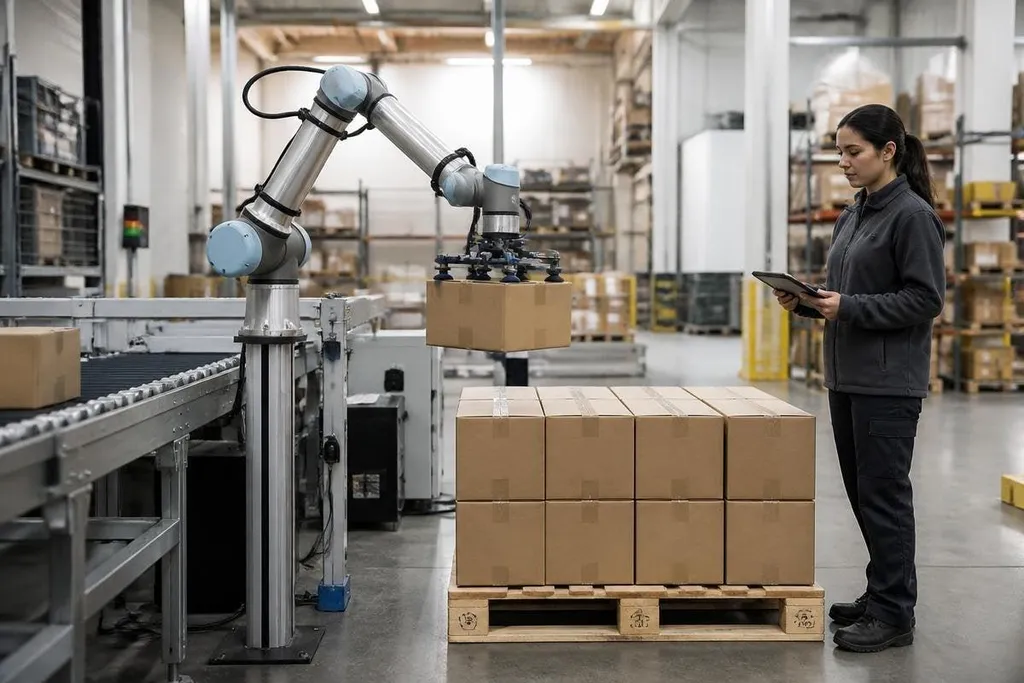
The first system needs a narrow job. “Automate the warehouse” gives a team too much room to build the wrong thing. Moving empty pallets between two fixed points gives the team a task, a route, a cycle time, and a buyer who can judge the result.
That focus also sets limits. The startup can choose the right gripper, sensors, battery, and software for one work area instead of trying to handle every site from the first shipment.
The buyer needs a result they can check. That might be fewer manual lifts, more inspection hours per shift, or a lower rate of damaged parts. A product claim earns trust when the company can show how the customer will measure it.
Build the whole system
The hardware is only one part of a working installation. The customer also needs software, charging, network access, staff training, spare parts, and a way to stop the machine safely.
This is where many young teams meet the real work. One that runs well in a test area may need new maps, floor checks, safety barriers, or changes to the customer’s process before it can run on a production site.
The startup should learn those details early. Each deployment can show where the robot loses time, where people need control, and which parts fail first. The team can then fix the product before shipping the same problem to the next site.
For a buyer comparing claims with evidence, robotics reporting on startups can put a product claim beside the task, site, and result behind it. That record leads into the money question: what the startup must sell, and what it costs to build and support.
Know the money before the sale
A low purchase price can hide a high operating cost. A buyer may need extra technicians, floor changes, battery replacements, software fees, or remote help before the robot saves money.
The startup should calculate the full cost over the period the buyer plans to use the system. That calculation needs the robot price, installation time, service work, power use, parts, and the cost of downtime.
The sales team also needs a clear answer when the machine stops. Can the customer fix a loose sensor? How fast can the startup send a part? Who reviews logs after a safety stop?
A product that cannot answer those questions is not ready for a busy site.
I’d back the startup that sells a narrow result and explains its limits over the one that promises a robot for every task.
Safety earns trust slowly
Safety cannot sit in a later version. The team needs a clear risk review before a robot works near people, along with stop controls, speed limits, fault handling, and records of what happened during tests.
The right process depends on the machine and its work area. A warehouse mobile robot, a surgical arm, and a farm vehicle face different hazards. Each needs tests that match its movement, payload, sensors, and surroundings.
A buyer will also ask who carries responsibility when the system behaves in an unexpected way. Clear logs, operating limits, maintenance steps, and training give people a way to answer that question without guessing.
A founder’s check before launch
Use this list before asking a customer to run the robot in daily work:
- Name the first job in one sentence and set a result the buyer can measure.
- Test the robot on the floors, lighting, loads, and network conditions it will face.
- Count installation, training, service, parts, power, and downtime in the cost plan.
- Record every safety stop and state what the operator should do next.
- Set a repair path with response times, spare parts, and a named owner.
- Ask the first customer what would make them order again.
A robotics startup becomes a real company when the answer survives a full workday, a failed sensor, and a second purchase decision. The next order is the number that tells you if the machine has earned its place.